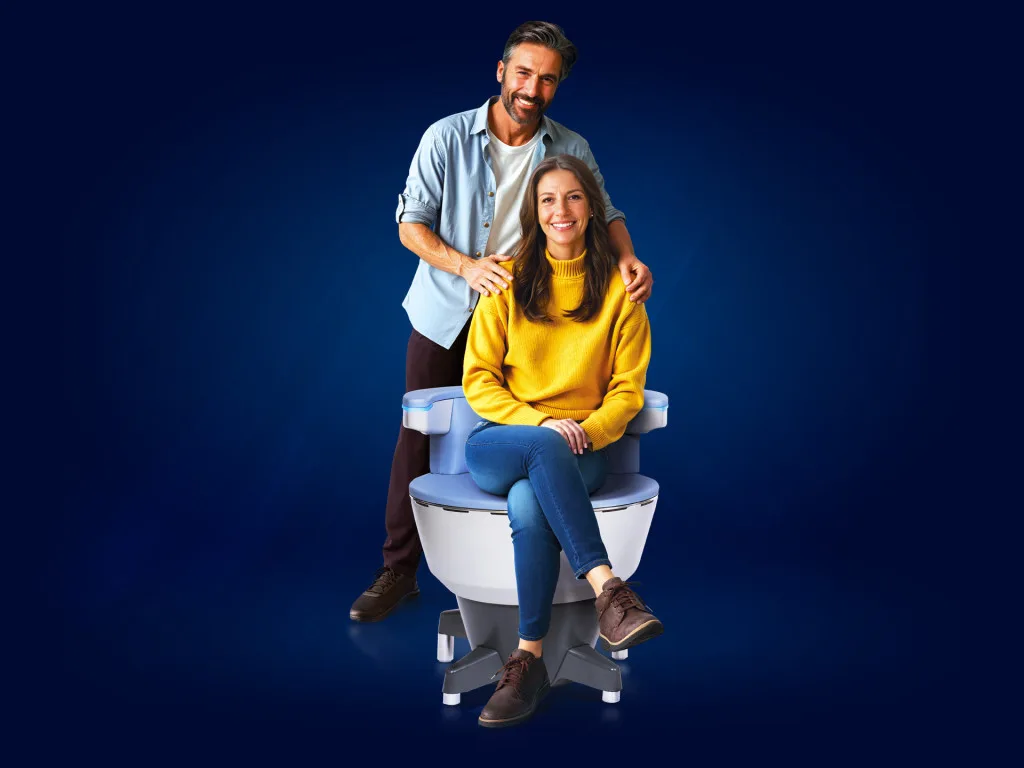
What overactive bladder actually feels like
Overactive bladder, or OAB, is not the same as stress incontinence. It's the sudden, intense need to urinate that arrives with little warning, often when you put your key in the front door, hear running water, or simply finish a meal. Sometimes the bathroom is reached in time. Sometimes it isn't. Patients describe the experience as exhausting, anxiety-provoking, and isolating, because so much of daily life starts to be planned around bathroom access.
What's happening physiologically
OAB usually involves involuntary contractions of the detrusor, the muscle wall of the bladder, that signal the brain that the bladder is full when it isn't. A healthy pelvic floor can suppress those signals and counteract the contractions; a deconditioned or neurologically uncoordinated pelvic floor cannot. The result is urgency, frequency, and sometimes leakage. Many patients have a mix of OAB and stress incontinence, which is why their experience never quite fits a single description.
Why medications work for some patients but not others
Anticholinergic and beta-3 agonist medications can be effective for OAB by suppressing detrusor overactivity. They also have side effects (dry mouth, constipation, cognitive effects in older patients) and not every patient tolerates them. Many patients find that medications help partially but not enough, or that the side effects outweigh the benefit. They're left wondering what else is available.
How Emsella addresses the muscular side of the problem
Emsella delivers approximately 11,000 supramaximal pelvic floor contractions per 28-minute session. These contractions rebuild the muscular and neuromuscular capacity to suppress detrusor overactivity and respond to urge sensations with control rather than panic. Unlike medications, the mechanism is mechanical and local, no systemic side effects, no cognitive impact, no interactions with other medications you may be taking.
What the research shows for urgency-predominant patients
Published studies on Emsella in patients with urge and mixed incontinence consistently show meaningful improvement in urgency episodes, frequency, leakage events, and quality-of-life scores. Around 95% of patients report some degree of improvement, and many are able to reduce or discontinue OAB medications under their prescribing physician's guidance. Results often begin appearing after the second or third session and continue developing for weeks after the final session.
What treatment looks like
You sit fully clothed on the Emsella chair for 28 minutes. The standard protocol is six sessions over three weeks, twice per week. No medication, no needles, no recovery. You can read, scroll your phone, or simply rest during the treatment, and walk out and resume your day immediately. Maintenance sessions, typically twice a year, help preserve the gains.
Why this matters beyond the bathroom
OAB shrinks your world quietly. You stop traveling. You map every outing around bathrooms. You sleep poorly because you're up two or three times a night. You stop trusting your own body. Restoring pelvic floor function doesn't just fix the leakage, it returns the freedom to go where you want, sleep through the night, and stop running the constant mental calculation that has been the background music of your daily life. The science is real. The treatment is comfortable. The conversation is private.
Wondering if Emsella is right for you?
Every consultation at Bromberg Wellness is doctor-supervised, free, and pressure-free. We'll tell you honestly whether you're a fit.